Ash dieback tree felling continues
Published: Tuesday 9 December 2025
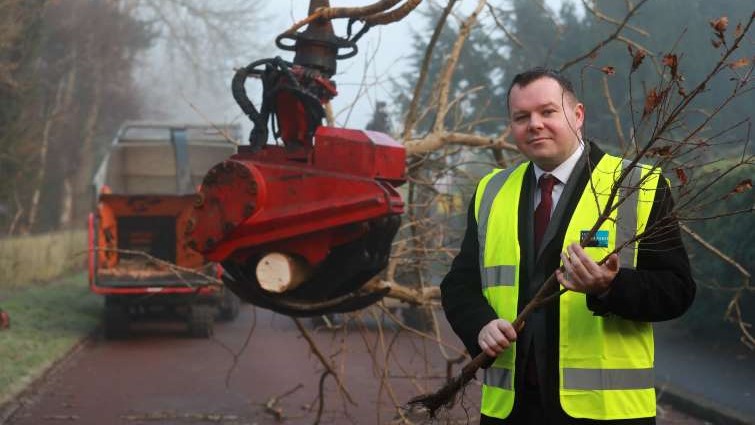
Work gets underway again this winter to safely remove ash trees that have been severely affected by Ash Dieback Disease.
Specialist teams will only be felling trees that pose an unacceptable level of risk to the public, particularly near roads, paths, and other public spaces.
Council Leader Joe Fagan said: “Ash Dieback Disease continues to be a huge threat to our environment.
“Unfortunately, there is a significant number of affected ash trees growing alongside roads and public spaces across South Lanarkshire that will have to be removed over the next 20 years.”
The programme of work is part of the council’s long-term Ash Dieback Action Plan, which focuses on identifying and managing areas affected by the Ash dieback disease.
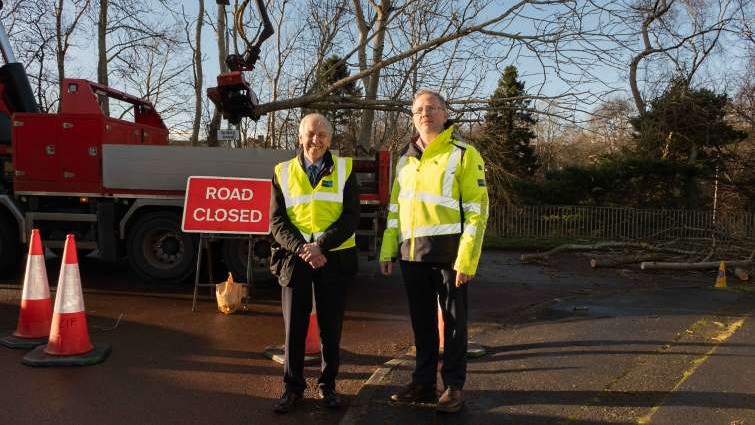
Councillor Robert Brown, the chair of the council’s Community and Enterprise Resources Committee, added: “Managing this problem as quickly and effectively as possible will help make sure this pervasive disease is managed safely.
“And the council’s replanting programme will ensure over time that tree populations and canopy cover will return with as little impact to our ecosystems as possible.”
The public has recently been asked for their thoughts on local tree planting projects which will go a long way to mitigate the losses of ash tree removal and deliver net biodiversity gain by 2034, and landscape recovery by 2054.
It is estimated that between 50% and 75% of ash trees on land the council manages or owns is and will be affected in the coming years.
It has spread across much of the UK including South Lanarkshire, with only a small fraction of trees proving resistant to the disease which is the most significant to affect broadleaved trees in the UK since Dutch Elm Disease gained prominence in the 1960s.


2 March 2026
Major improvements on way for road in Rutherglen
27 February 2026
Rural Conference set to take place next month
26 February 2026
Grants awarded to “can do” communities
25 February 2026
Historic budget agreed for South Lanarkshire
24 February 2026
Footbridge at station will re-open next month
24 February 2026
Connor is Apprentice of the Year
23 February 2026
Major carriageway resurfacing works for road in East Kilbride
19 February 2026
Champions highlight Care Day 2026
17 February 2026
Strathaven Academy rewarded for international approach
17 February 2026
Tackling rubbish fires in our neighbourhoods